Sapevate che Berlino è la città europea con il maggior numero di musei?
Attualmente, la capitale tedesca ospita oltre 170 musei. Questi musei coprono una vasta gamma di temi, dall’arte antica a quella contemporanea, dalla storia naturale all’architettura e alla cultura urbana.
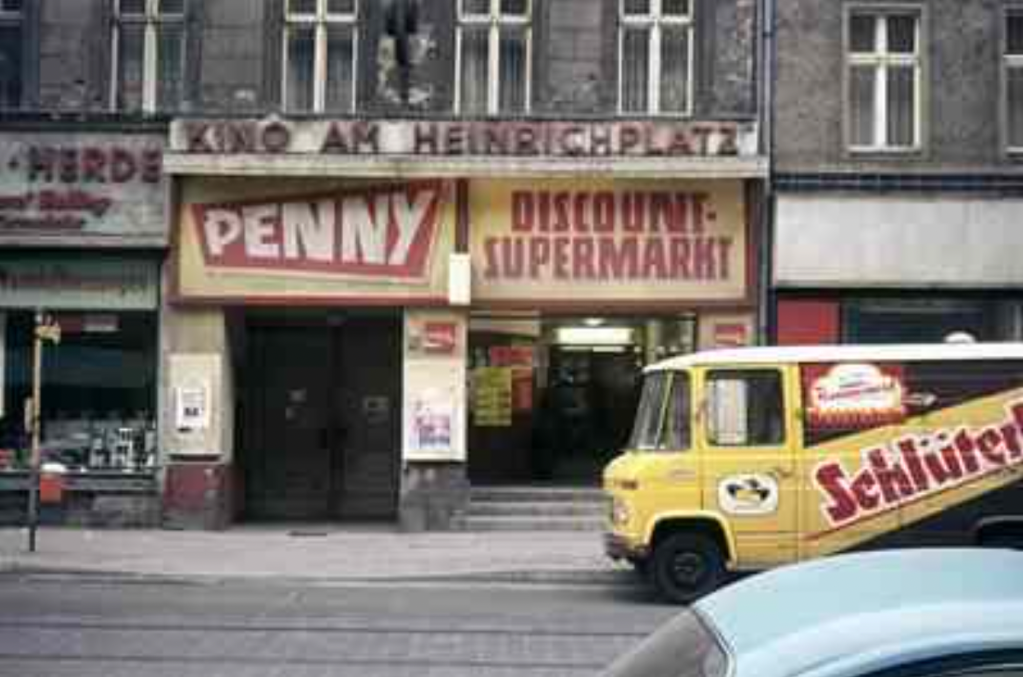
Quello che ad agosto del 1978 diventerà il leggendario SO361 di Kreuzberg, punto nevralgico della scena punk di Berlino dove si esibirono band del calibro dei The Cure (28 maggio 1980)2, Black Flag, New Order, Dead Kennedys, Adam and the Ants, Suicide, Exploited, ecc., nel 1975 era sede di una filiale del Penny-Markt – che chiuse poco dopo perchè gli abitanti del quartiere non potevano permettersi neanche i prezzi di un discount – e ancora prima un cinema, andato completamente a fuoco nel marzo 1966.
SO36, che sta per Südost 36, è il CAP che è stato assegnato al quartiere nel 1929 ↩︎
“(…) A few days later, we played our 1st gig in Berlin. Keep in mind that in the early 1980s this was a city divided, as the Wall was still in existence, and it was a little difficult to enter the small enclave that was West Berlin, even for Western Europeans. The bus stopped at the border and a heavily armed East German border guard got on the bus and asked for our passports. As soon as he realised we were a band, the following conversation ensued. ‘You are a musical group, yes? You have T-shirts, yes?’ We produced two or three T-shirts and gave them to the guard, who furtively, stashed them under his greatcoat with a nervous look. Then he handed back our passports with a flourish and waved us through the border post. Our first gig was at SO36, a club in the heart of Kreuzberg, which was the alternative subculture district, because it was in the poorest area of the city and home to the largest Turkish population outside of Turkey. Truly a place where east meets west, which made it very exotic to us. The reception we got was very odd: I felt like we were being studied under a microscope. The club was long and narrow, with the stage at one end. The place was absolutely packed with people, but no one talked. The silence in the room was complete. All 600 or so people just stared straight at the stage with tremendous intensity. We started with ‘Seventeen Seconds‘- not the liveliest opening song, but it suited this very intellectual and introspective audience. From there we went straight into ‘Play for Today’, and I couldn’t detect so much as tapping foot among the stone-faced crowd. I shouldn’t have worried, because by the time we got to the end of the set, with ‘A Forest’ the joint was, as they say, jumping. I think Robert won them over by changing the lyrics to ‘Killing an Arab’ to ‘Killing Kevin Keegan’, an English footballer of some repute.” Un estratto dal libroCured. The Tale of Two Imaginary Boys del cofondatore dei The Cure Lol Tolhurst (2016) ↩︎
Nel 1998, l’Oberlandesgericht di Francoforte sul Meno ha stabilito, anche in relazione alle consuetudini internazionali, che gli uffici anagrafici non possono rifiutare il desiderio di un genitore di dare a un bambino il nome Gesù (in tedesco: Jesus).
Infatti, mentre il nome è sempre stato molto diffuso nell’Europa meridionale, in particolare in Spagna e Portogallo, in Germania gli uffici anagrafici hanno potuto a lungo rifiutare la registrazione del nome. Solo nel 1998 l’Oberlandesgericht di Francoforte sul Meno ha stabilito che il nome Gesù è un nome comune in tutto il mondo e che pertanto non sussistono obiezioni legali alla registrazione di questo nome all’anagrafe.
La decisione del tribunale tedesco ha suscitato anche alcune polemiche. Alcuni hanno criticato la decisione, affermando che il nome Gesù è sacro e non dovrebbe essere utilizzato in modo profano. Altri hanno sostenuto la decisione, affermando che il nome Gesù è un nome bello e significativo che può essere utilizzato da chiunque.
Questo infoblog berlinese si propone di essere un punto di riferimento per italiani e italofoni a Berlino e in Germania. Qui troverete aggiornamenti su lavoro, casa, burocrazia, fisco, curiosità linguistiche, cultura, eventi e tempo libero. Grazie alla nostra rete di professionisti (traduttori giurati, interpreti, agenzie di relocation, imprese di servizi, associazioni culturali e sanitarie) possiamo anche aiutarti a trovare i contatti giusti.


 Italiani a Berlino